

Smart Living Redefined: The Technology Inside Every Abu Al Naga Residence

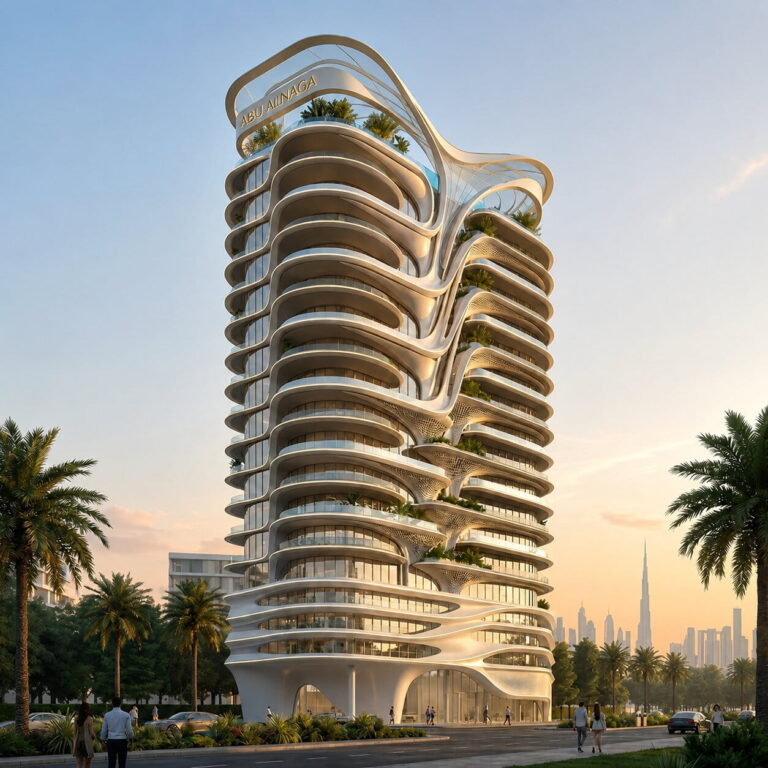
The Al Ezz residences at dusk, Production City, Dubai.
Dubai’s ultra-luxury property market has entered a new phase, one defined less by speculation and more by long-horizon capital seeking permanence, prestige, and portfolio stability. Understanding why global investors continue to allocate here begins with understanding what has changed.
Over the past three years, the profile of the buyer at the top of Dubai’s residential market has shifted. Where earlier cycles were driven by yield-seeking capital and short-hold flips, the current cycle is being shaped by families, single-family offices, and private wealth structures acquiring residences intended to be held for a generation. This is not a trend in the fashion sense. It is a structural change in the composition of demand.
For developers operating at this tier, the implication is significant. The product now has to earn its place in a portfolio that already contains addresses in London, Monaco, New York, and Singapore. That comparison sets the bar for design, service, and financial structuring.
Five Drivers Behind the Current Cycle
Speak to the private bankers, family office principals, and brokerage heads active at the AED 20 million and above tier, and a consistent set of drivers emerges.
The Return of the Long Hold
The most instructive data point in the current market is not price growth. It is hold period. Average resale timing at the ultra-luxury tier has extended meaningfully compared with the 2013 to 2016 cycle. Buyers are not flipping. They are staying.
This has a compounding effect on how developers design and how brokers pitch. When a residence is being acquired for a fifteen-year hold rather than a three-year hold, ceiling heights matter more than floor plates, structural acoustic separation matters more than amenity count, and service continuity matters more than launch pricing.
Where Capital Is Concentrating
Not every part of Dubai’s luxury market is behaving identically. Capital is concentrating in a small number of micro-locations where three conditions align: proven demand from principal residents, controlled new supply, and defensible views or waterfront exposure.

Versailles Tower, Dubailand. Interior view of a principal residence.
For international investors evaluating Dubai for the first time, the practical implication is that generalised market data can mislead. Aggregate price indices average across a market that is now sharply differentiated. What matters at the ultra-luxury tier is location by location, building by building, and increasingly, developer by developer.
What Discerning Buyers Now Ask For
Across our conversations with private clients over the past twelve months, the specification requests have converged on a recognisable pattern:
These are not amenities in the traditional sense. They are the operational characteristics that determine whether a residence still commands its address in fifteen years.
The Outlook
The near-term outlook for Dubai’s ultra-luxury segment remains constructive. Supply at the top of the market is limited by land availability in the most desirable micro-locations, by the extended development cycles required to deliver product at this specification, and by the small number of developers with the balance sheet and operational depth to build for this buyer.
For global capital seeking a residence that combines lifestyle utility with capital preservation, Dubai’s proposition has never been more coherent. The market has grown up. The buyer has changed. And the product, at its best, is now genuinely comparable with the world’s finest addresses.
For qualified enquiries about our current and forthcoming residences, please contact our private client team.



Ready to own a residencet hat’s truly extraordinary?
very Abu Al Naga journey starts with a conversation. Tell us about your aspirations and we will take it from there.
Register Your Interest